Whence Camest Thou. A talk by Jay Cole Simser
Click on picture to enlarge.
Humans first climbed out of forests and found other places to live. Some adapted caves as homes, either temporary or more permanent. Decorated caves show us that magical rites were performed in them to insure a good hunt so that there would be
food on the table. These were probably the first “churches” or religious centers where humans petitioned the deity or deities as the case may be. A class of priests developed who would have more power because they were able to perform rites and ceremonies to invole their gods. These caves became sacred sites. In more recent times we have rediscovered them, and marvel at the artistic sophistication of early humans.”

Someone, somewhere at some time came out of that cave, someone, somewhere at some time began to look at the sky and noticed certain things. They noticed that at certain times the sun rose at this spot and then it shifted. They noticed that the moon was a big ball of light some of the time and a tiny sliver at other times. Someone, somewhere at some time began a process of dedicated observation. Someone, somewhere at some time began to notice more and more details. Someone, somewhere at sometime noticed that they could predict movements in the heavens from these observations. Someone, somewhere at sometime figured out a method for passing on that information from one generation to the next – each generation adding on to that knowledge and understanding, From these observations grew knowledge of the geometric nature of the universe and the understanding of patterns which they were then able to put to practical use in building the ancient wonders of the world and eventually the great cathedrals of Europe.1

Fremasonry is the inheritor of that tradition. In Freemasonry knowledge is accumulated and passed down from one generation to another.
“Primitive humans gathered together in an attempt to gain favor from God. While there is no direct connection between this fundamental inclination and the more recent Freemasonry, nonetheless the basic need to band together for things other than the mundane underlie both primitive human instinct and Freemasonry. In more primitive societies, then as now, men were regularly segregated from women, and slept in a “Men’s House” where boys were trained in the art of becoming men. Joseph Fort Newton and, more recently, Robert Davis have both suggested that the Masonic Fraternity is the “men’s house” of today. In brief, it is a place where men can gather together apart from women to learn how to become men.”
There are two kinds of Masonry, Operative and Speculative. There are two kinds of Masonic History, Actual and Fantastical.
Masonic History of the Fantastical sort would have Masonry descended from Ancient Egypt or brought to us by beings from another planet. Freemasons built all the pyramids as well as King Solomon’s Temple. The Pyramid builders wore aprons and chiseled their Masonic signatures or marks on ancient monuments.
Another scenario put forth is that the Knights Templar when dispersed escaped to Scotland where they secretly transformed themselves into builders and built the Roslyn Chapel and thus started the Masonic Fraternity. Masons are secretly plotting for world domination so that they can avenge the murder of the Templars.
In fact, there is no definitive history of the beginnings of the Masonic Fraternity.
Either of these tales may be the answer or neither of them. What we do know is that Masons met. They developed rituals and speculated on morality. Their activities were described in the Regis and Cooke Manuscripts dated 1390 and1450. Both include King AEthelstan who some claim was the first King of All England. Both are about Masonry.
 Brother Bill Yungclas gives an extended Trowel lecture in my Lodge. It says in part:
…in man there was a vital spark that in the bird, the beaver,
the wasp or the spider never knew; inspiration, not instinct,
guided his budding soul, a divine discontent with his habitation
seized him; the hole in the rocks no longer satisfied his cravings
and he began to build out in God's glorious sunshine; feeble
were his efforts, few his tools and mean his creations, but he was
Crude shelters took the place of dank and dingy dens; a roof
sheltered him, the embryonic pillars supported the crossbars, and
as the years waxed and waned he built better and better until his
aspirations attained their highest form in the completion of the
magnificent cathedrals of Europe, the masterpieces of his mind
These builders were Masonry's progenitors, at first an operative
science, it reached it's fruition as such, mounted yet higher and
became a speculative art. (Its end aim the building of a perfect
character, the realization of the designs on the trestle board of
the Great Architect of the Universe.)

I love this lecture because it reminds me of the true origin of Masonry and of how it became a Speculative Art. The Builders who met in secret to pass on their skill and move us out of the caves…because of that vital spark that attained its highest form in the magnificent cathedrals of Europe and went on to higher form in the Speculative Art, applying the principles of building to life and how to live.
To me that is where we can trace our fraternal origin. No amount of guesswork is necessary. Masonry as an Operative Science began there. These men were the First Freemasons. They were “free” from the serfdom that bound people to one set place. They were allowed to travel to foreign countries to work on the buildings. And they would meet, eat, and shelter outside working hours in a Lodge on the southern side of a building site, where the sun warms the stones during the day.
They met to share their building trade and the secrets of their art and you could consider them a school of sorts. Once this began the fraternity transformed from merely an operative to a speculative organization. Slowly gentry and local “movers and shakers” were admited into their ranks.Over time the nature of the Fraternity had changed.. I would imagine that as men do today they also loved to imagine things. They loved to sit around and speculate on the nature of life and their place in the universe. They might have begun by assigning meanings to the tools they used, meanings which have an esoteric definition. The trowel became more than just an instrument to spread mortar but also a way of spreading brotherly love. They drew designs on the floor called “tracing Boards” to use in illustrating their teaching lectures as aides to their memory and for use in instruction. These were not permanant drawings on the floor but were redrawn and then destroyed so that the profane would not be able to obtain the secrets from them.
Gradually with the development of dedicated places for Masons to meet these Tracing Boards became permanant fixture and the symbolism was on display for all to see. I am going to editorialize here momentarily to just state that personally I find the modern trend to have white walls and plain carpet rather unsatisfying. If you have ever been in one of the old Masonic buildings such as the Grand Lodge building in Philadelphia you will notice that there is much masonic symbolism carved into the wood and painted on the walls. These can also be found in some of the older lodges in Iowa. You can spend hours studying these works of art.
This practice has lost favor as Masons placed emphasis on the ritual (words only) and no longer studied the rich meanings behind the fraternity, in fact we put so much emphasis on getting the words exactly correct that we forget the depths of meaning behind them. In the third section of the first degree there is much explanation of the symbolism of the craft but sadly, this is not much given in this day and age. Perhaps things will change as more and more Traditional Observance Lodges are being formed around the country.
Masons who ate, worked and talked together built a bond with one another and eventually developed lectures and ceremonies which taught these lessons and the nature of the association changed, as did their meeting places. Rituals developed with many levels of meaning and once the rituals were over the Festive Board would consume the rest of the evening.
The Festive Board (or Social Board) part of the meeting is sometimes called the South. Remember they met in a Lodge on the southern side of a building site, where the sun warms the stones during the day.
It is no coincidence that the Junior Warden who sits in the South of the Lodge is in charge of refreshments. There is nothing in Freemasonry of today which has not been thought about and which does not have more than one meaning.
Early Lodges often met in a tavern or any other convenient fixed place with a private room. This was for convenience and for ease of obtaining refreshments. The Festive Board was an important part of the Lodge activity. These social parts of the meeting were informal, yet they were governed by a set of rules. The ritual of the lodge spilled over into the Festive Boards and the decorum was ordered and had its own ritual. Certain activities, toasts and lectures would be made or given and these were spaced so that the Brethren would have time to visit, socialize and speculate on a wide range of topics.
Four English Lodges meeting in London Taverns joined together and founded the Grand Lodge of London (now known as the United Grand Lodge of England). They had held meetings, respectively, at the Cheshire Cheese Tavern, the Apple-Tree Tavern, the Crown Ale-House near Drury Lane, the Goose and Gridiron in St. Paul's Churchyard, and the Rummer and Grapes Tavern in Westminster. Taverns were not just alehouses. They were not the “beer joints” that we may think of today when we hear the term “tavern”
They were private establishments that were significant meeting places for groups and organizations.
Tun Tavern in Philadelphia was the host for St. John's No. 1 Lodge of the Grand Lodge in its first meetings in 1732. It was also where the first Marines were recruited when formed by the Continental Congress. Other early Masonic meeting places in Philadelphia were Indian King Tavern and Royal Standard Tavern.
The first lodge in Boston was constituted July 30, 1733, at the house of Edward Lutwych, an inn at the Sign of the Bunch of Grapes in King Street. In 1786, 33 representatives from
lodges met at the White Hall Tavern in New Brunswick with the purpose of forming a Grand Lodge for New Jersey.
Very quickly Masonic lodges spread throughout the colonies and established themselves as accepted adjuncts of civic responsibility.
A history of Masonry in Williamsburg has this account:
Because there were very few Masonic Halls built until around the mid-eighteenth century, like their English brethren, early Masons in Williamsburg met in taverns. The first Masonic records of the Williamsburg Lodge that have survived to this day indicate that the revived lodge in Williamsburg was certainly active and meeting in the Crown Tavern in 1762. … Meetings were convivial affairs, and were often combined with eating and drinking, which gave rise to formal "Table Lodges," a rather formal feast which incorporated Masonic ritual, eating a lavish dinner, toasts offered between meal courses, some business being conducted, songs being sung, and general brotherly fun and fellowship. The tradition of conducting "Table Lodges" fell out of favor for well over a century, but is being revived again by many lodges today.
The Williamsburg Masonic Lodge continued to meet at the Crown Tavern for several years before re-locating to the Market Square Tavern in 1773
Toasts and responses to toasts are customary at Festive Boards. For many years the Brothers of Arcadia Lodge were lead in our Masonic Table Lodge by Brother Bob Allen who brought us the rather regimented Table Lodge of the military. The Des Moines Scottish Rite Bodies have a different type of Table Lodge with a more relaxed form of toasting but however it is done the experience of making the toasts is a very special one and goes back in antiquity further than the history of Freemasonry.
As early as the 6th Century B.C., the Greeks were toasting to the health of their friend's for a highly practical reason — to assure them that the wine they were about to drink wasn't poisoned. To spike the wine with poison, had become an all too common means of dealing with social problems — disposing of an enemy, silencing the competition, preventing a messy divorce, and the like. It thus became a symbol of friendship for the host to pour wine from a common pitcher, drink it before his guests, and satisfied that it was a good experience, raise his glass to his friends to do likewise.

The Romans, impressed by the Greeks in general, tended to handle their interpersonal problems similarly. It's no surprise then, that the practice of toasting was popular at Roman get-togethers as well. The term toast comes from the Roman practice of dropping a piece of burnt bread into the wine. This was done to temper some of the bad wines the Romans sometimes had to drink. (Much later, even Falstaff said, "put toast in't" when he was requesting a jug of wine in Shakespeare's Merry Wives of Windsor.) The charcoal actually reduces the acidity of slightly off wines making them more palatable. In time, the Latin tostus meaning roasted or parched, came to refer to the drink itself. In the 1700's, partygoers even liked to toast to the health of people not present — usually celebrities and especially beautiful women. A women who became the object of many such toasts, came to be known as the "toast of the town."

By the 1800's, toasting was the proper thing to do. Charles Panati reported that a "British duke wrote in 1803 that 'every glass during dinner had to be dedicated to someone,' and that to refrain from toasting was consideredsottish and rude, as if no one present was worth dr ' inking to.' One way to effectively insult a dinner guest was to omit toasting him or her; it was, as the duke wrote, 'a piece of direct contempt'."
The enjoyment of good food, convivial company, and toasts with alcoholic beverages are a part of the Masonic experience. In fact the dining together should be a major part of Masonic life and fellowship for such strengthens our bonds and makes us Brothers at the table and in our lives.
I enjoyed researching the material for this talk. I think it may have been longer than the Brethren wanted because no one bothered to give me any feedback, nor was I thanked for preparing the speech. Therefore I shall probably not participate in this event in the future..


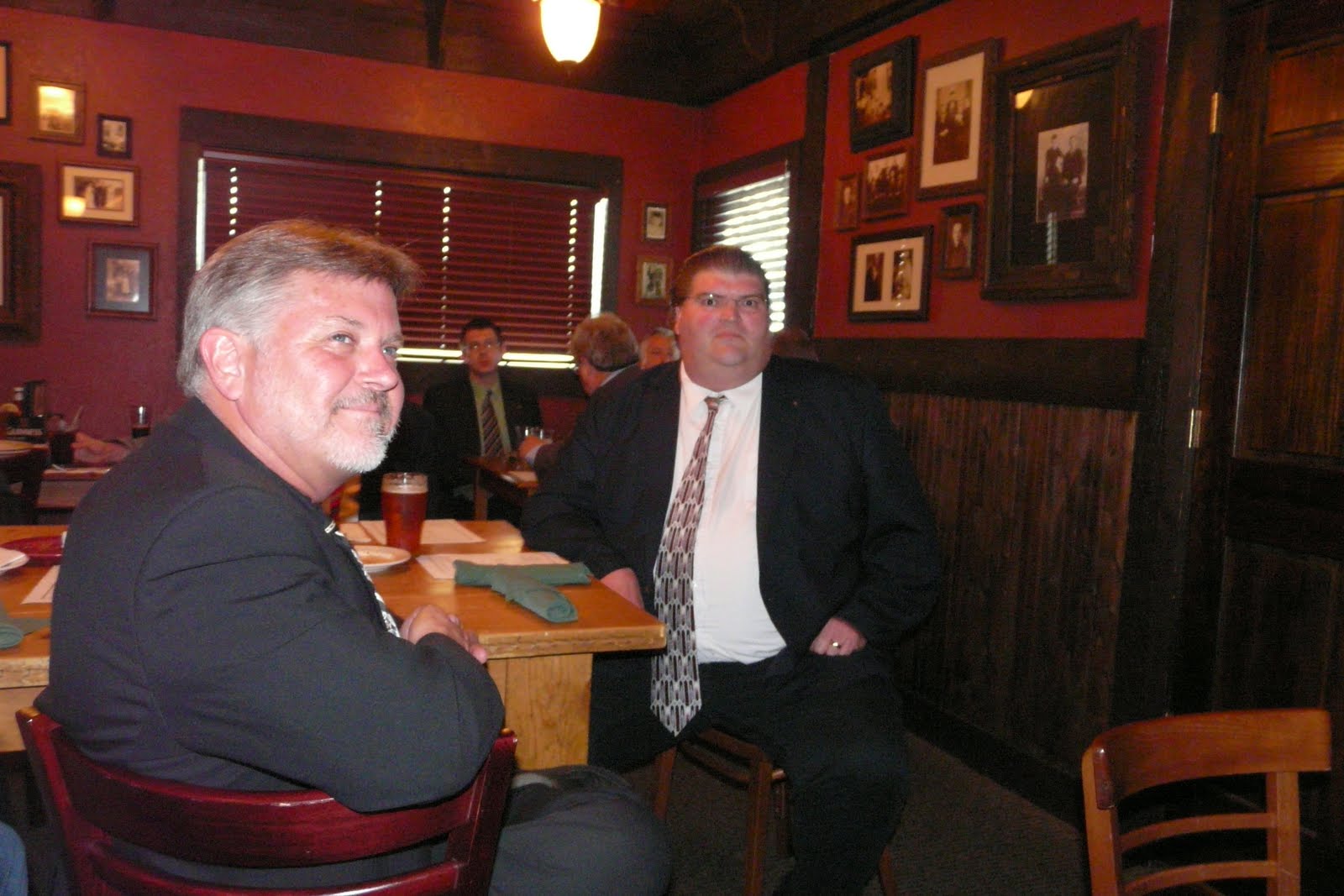


Grand Lodge Response
Now the Grand Lodge has sent out the following:
Seem like good advice to me.